


You won't find long evenings, swarms of people or a car park full of coaches. You will find a loch gone quiet, a village that slows to its own pace, and a stillness that summer rarely allows.
Winter here asks for a different kind of trip. Less ticking off, more settling in. Fewer miles, longer meals, a walk in the short bright hours and a warm room to come back to. If that sounds like your kind of travel, read on.
Daylight and weather: what to expect
Winter days at Loch Ness are short, and the weather shapes most of what you do. By late December, daylight at Fort Augustus is closer to seven hours, with the sun rising near nine and setting before four.
The gift in that is the light itself. The sun stays low, so mornings and afternoons run long and golden, and the hills along the Great Glen take on colours that flat summer light never gives them.
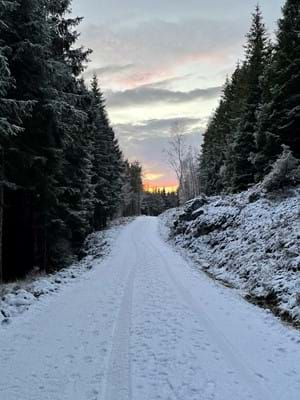
The weather is changeable. Expect temperatures hovering just above freezing, a fair chance of rain, and some bright, frosty days that are the best of the season. Snow tends to settle on the higher ground first and occasionally reaches the shore. Plan around daylight rather than the forecast and treat a clear morning as a gift.
The loch itself: stillness, mist and fewer people
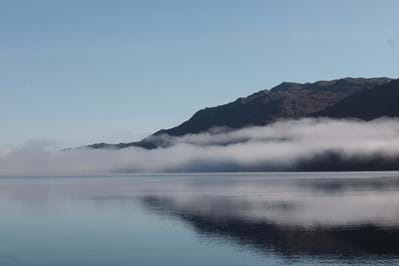
Loch Ness is at its most atmospheric between November and March. On calm mornings the surface turns to glass, mist lifts off the water in slow layers, and the far shore appears and disappears. The loch is long, narrow and deep, holding more fresh water than every lake in England and Wales combined. In winter, with so little between you and it, that scale is easier to feel.
The crowds thin out, too. Viewpoints that are busy in July can be entirely yours. It is the quiet people say they come to the Highlands for, and winter is when it is actually on offer.
What to do: shorter days, slower plans
Winter at Loch Ness suits a few things done well, rather than a day of stops.
- Walk in the bright hours. Fort Augustus sits at the southern end of the loch, where the Caledonian Canal climbs through its flight of locks. Short routes along the towpath, the shore and nearby woodland reward an early start. Carry a head torch and be off the hill before dusk.
- Watch for wildlife. Red deer often move to lower ground in winter, and the birdlife on and around the loch is easier to spot against bare trees and still water.
- Look up after dark. Long nights mean more time under the stars. On clear nights the sky is darker than you can imagine, and the northern lights are an occasional possibility, never a promise.
- Visit the castle and the canal. Urquhart Castle and the locks are quieter in winter. Many attractions and boat trips run reduced winter schedules, so check opening times before you go.
- Rest. After a long walk on the Great Glen Way, or a hard few weeks of work, winter gives you permission to do very little.
Where to stay and eat: coming back to Coftie
In winter, the place you return to matters most. At The Lovat, our 29 bedrooms in Fort Augustus are shaped by Coftie, a Highland word for sheltered and entirely at ease. It is less a style than a way of hosting: the feeling of coming in from the cold and having nothing left to do.
We are also an eco-hotel on a path towards B Corp certification, so a winter stay here is a considered one.
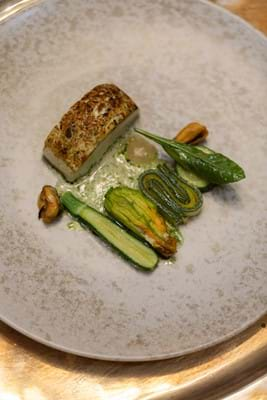
Our restaurant, Station Road, holds three AA Rosettes and is listed in the Michelin Guide. The cooking follows a simple idea, forage, gather, grow, rooted in Highland food history and guided by the season. Winter is where that approach is clearest: the menu follows what the land and water are giving at that moment, which is a very different thing from a summer menu.
Practical tips for a winter visit
- Getting here. Trains run to Inverness and Fort William, and coach services connect the two through the village. Check winter timetables, as they can differ from summer.
- Driving. Roads can be icy on frosty mornings, especially on higher ground and in shaded stretches. Check conditions before you set off and allow extra time.
- Packing. Waterproof outer layers, warm layers underneath, proper boots, a hat, gloves and a head torch.
- Planning your day. Keep the outdoor part between about nine and half past three and leave the afternoon and evening for a long lunch, a rest and dinner.
- Checking opening times. Attractions, cruises and cafes may close earlier or on certain days in winter. A quick check saves a wasted journey.
- Booking. Winter is quieter, but the festive period fills early. If you have particular dates in mind, book ahead.
So, is it worth it?
If you want stillness, low golden light, a good meal after a good walk and somewhere sheltered to end the day, yes. Winter is when Loch Ness feels most like itself.
You can see availability and book your stay at The Lovat at thelovat.com.


